A member success story:
Julia carries a mobile app in her pocket to protect her community from deadly disease
The family sought Júlia out late at night, looking for help.Their child was desperately ill: fever, vomiting, diarrhea. They were frantic.
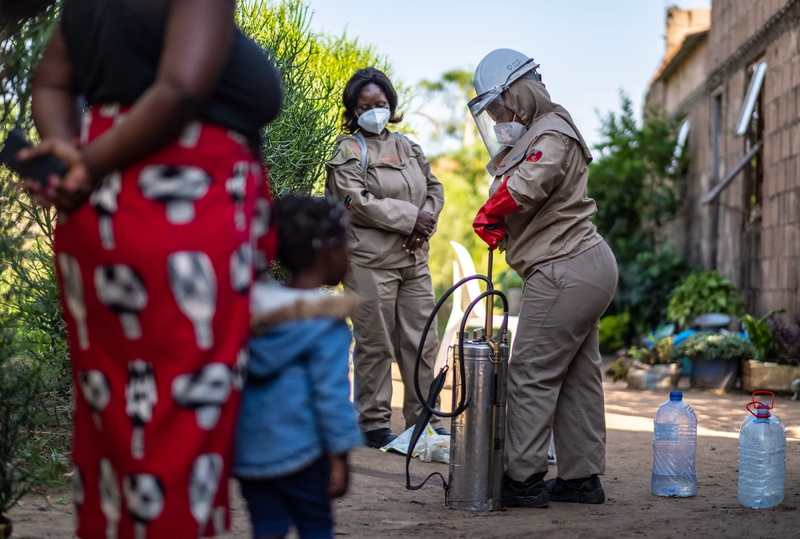
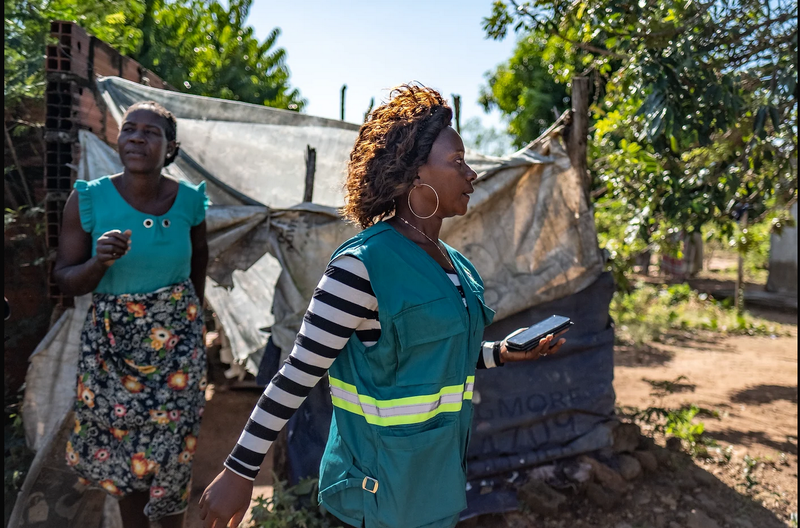
Júlia Lúis is an agente polivalentes elementare, or community health worker, in Upalaa village in Boane District, Mozambique. She visits families in her community every day, listening to and learning about their healthcare needs, conducting clinical assessments, providing health advice – and administering lifesaving medicines.
„I did the malaria test, and I gave them the medicine,” she said. “After two days I went to their home, and I found out that the child was already getting better. I was thrilled.”
Bringing healthcare to some of the hardest-to-reach places
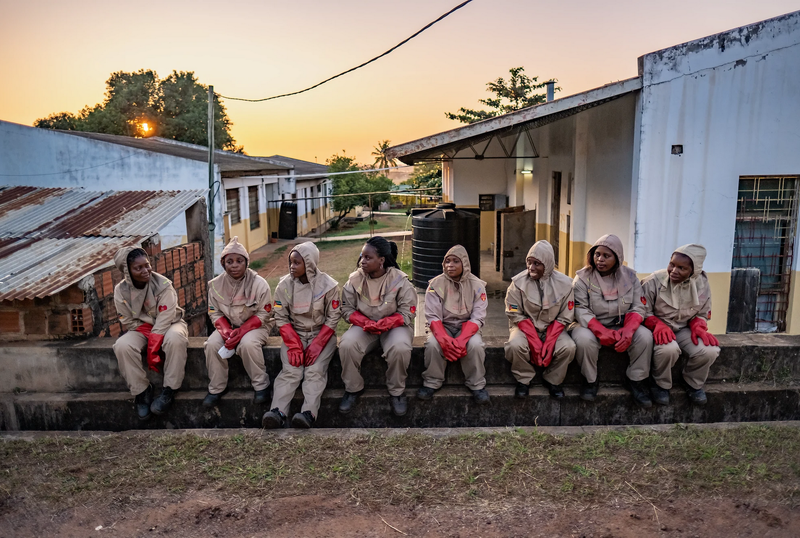
Júlia is one of 8,500 community health workers in Mozambique. She and her colleagues are nominated by fellow community members. They undergo a rigorous training course and then provide much-needed health services, including in some of the hardest-to-reach places.
Community health workers prioritize reaching children under 5 and focus on preventive care to protect people from deadly diseases like malaria and pneumonia. Most oversee 500 to 2,000 families.

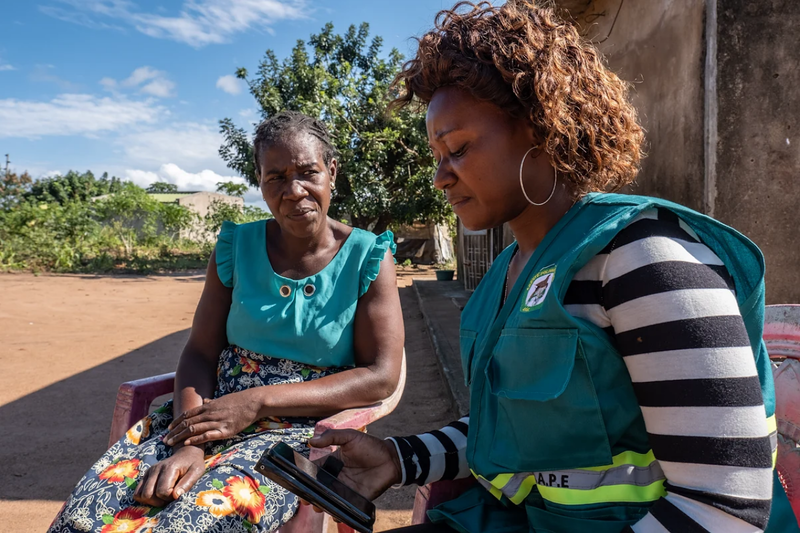
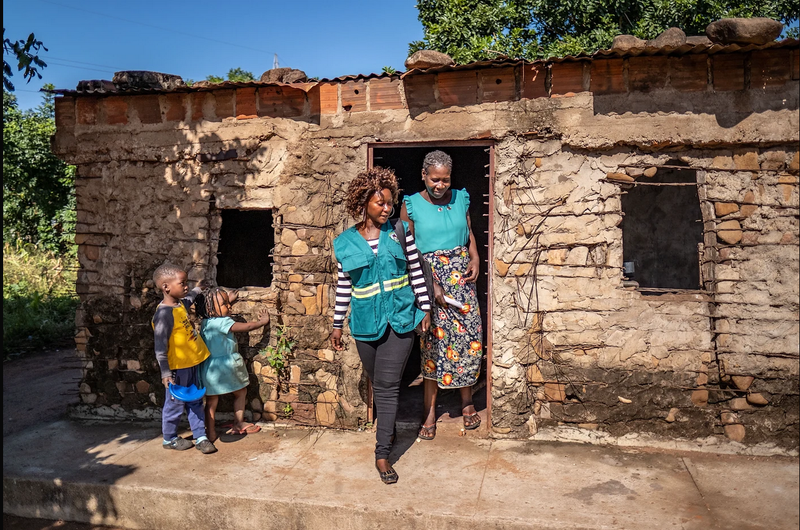
Júlia with Gil Agostino and his daughter Elisa during a follow-up visit to the family’s home in Upala-a, Mozambique. Elisa recently contracted malaria but is recovering well. Photo credits: Tommy Trenchard, The Global Fund
On average, Júlia visits 25 to 30 families per month – trekking hundreds of kilometers and tracking hundreds of patients.
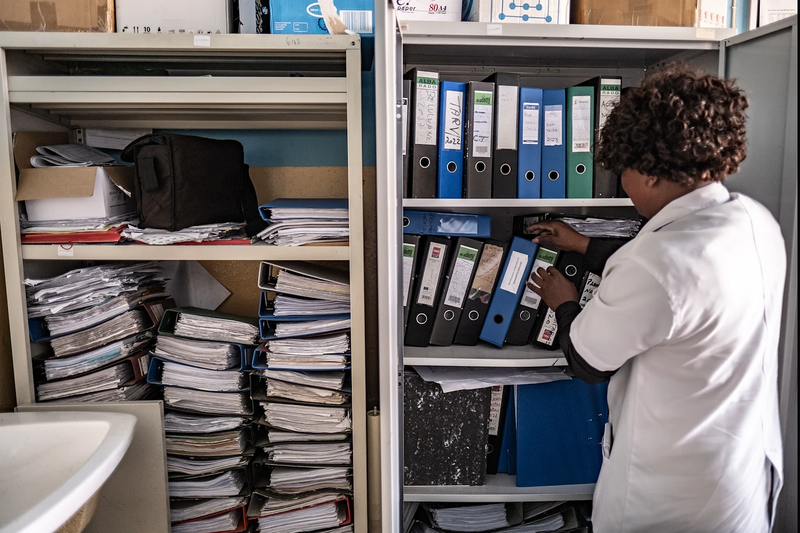
Not so long ago, she carried a massive binder filled with hundreds of loose-leaf pages: “The registration book is too big. And I was obliged to walk with the handbook module to give lectures, which is too big as well.”
For most of her 10-year career, Júlia relied on these binders to record patient information, keep track of supplies and give lectures on drinking clean water and maintaining sanitary toilet facilities.
The binders got soaked in the rainy season and slowed her down in the heat.
Then came upSCALE: a smartphone app that has transformed Júlia’s work – and offers a wealth of digital health data to strengthen Mozambique’s health systems.
Not so long ago, Júlia carried binders
filled with hundreds of loose-leaf pages to keep track of important
health information. Now, she uses upSCALE to track patient data. Photo credits: Tommy Trenchard, The Global Fund
What’s in the app?
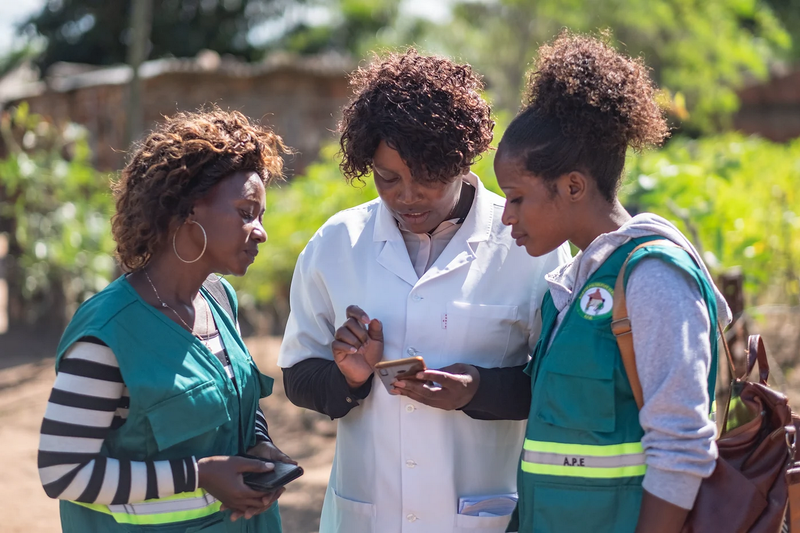
upSCALE is Júlia’s constant companion on home visits. She opens it as soon as she arrives to add patient contact information and update medical histories.
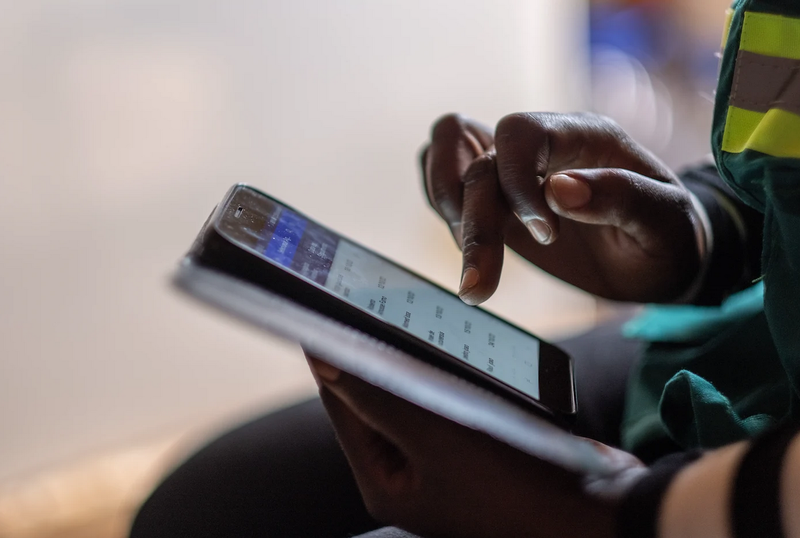
An interactive feature, complete with diagrams and illustrations, guides Júlia and her patients through discussions about symptoms: Do you feel warm? Are you tired?
„They can see the illustration from images which are in the cell phone,” Júlia said. “I use [them] to show the people that this means that, and they get the explanation so easily.”
Júlia’s app feeds information to her supervisor, Emedita da Julia Sefana, at the Boane Centro de Saúde.
Emedita uses the data to inform her conversations with Júlia: providing feedback, filling gaps in Júlia’s experience and introducing new tools and knowledge.
Emedita also uses upSCALE to anticipate and prevent stock-outs and identify high-priority patients and regions that need special attention. The app provides Emedita with the information she needs to understand and respond to her community’s needs as well as capture vital data to prepare for future health threats.
upSCALE includes an interactive feature with images that helps Júlia and her patients identify symptoms, and a step-by-step guide to diagnose and treat illnesses like malaria. Photo credits: Tommy Trenchard, The Global Fund
Supporting urgent health needs after a crisis
In early 2023, Mozambique was hit hard by wave after wave of rain. In less than eight weeks, the country was inundated by more than a year’s worth of total rainfall. Tropical Cyclone Freddy made landfall twice, bringing winds that reached 148 kilometers per hour (kph).
„The road that I use to get to the community was flooded,” Júlia said. “I couldn’t do my job. I couldn’t work.”
Once the storms passed, large bodies of still water became breeding grounds for disease-carrying mosquitoes. Malaria rates shot up.
upSCALE helped Júlia and her colleagues monitor infections. They logged symptoms, noted who needed a test and where, and kept track of medicines and chlorine tablets distributed to each home.
Data from these outbreaks – logged in the app and shared among community health workers as well as regional and national health officials – paint a picture of how extreme weather events impact people’s health and lives across the country.
These data are increasingly important to prepare for and address health crises brought on by cyclones like Freddy, Alvaro and Belal – which drew near Mozambique’s coast in early 2024 and reached winds of 170 kph.
As extreme weather events become more frequent, the window of time to prepare for and address health crises brought on by storms, floods and gale-force winds becomes smaller – making tools like upSCALE even more vital.
Júlia inspects damage caused by Cyclone Freddy, which brought rains and floods that created the perfect conditions for disease-carrying mosquitoes to breed. Photo credits: Tommy Trenchard, The Global Fund
“What you did [for] me is priceless”
As of January 2024, more than 3,600 community health workers and approximately 1,000 supervisors use upSCALE in 7 out of 11 provinces in Mozambique. With investments from the Global Fund and private sector partners, and support from the Malaria Consortium and UNICEF, Mozambique’s Ministry of Health aims to launch the app nationwide by the end of 2026.
In the future, data from upSCALE will be seamlessly incorporated into the national health information system to help monitor, evaluate and act on health needs across the country.
The Global Fund invests more than US$150 million a year to support use of digital health tools like upSCALE. This includes working with partners like Dimagi, which built the technology that supports upSCALE in Mozambique and a similar tool in Burkina Faso.
The Global Fund also recognizes that tools like upSCALE are only effective if people know how to use them.
Between 2021 and 2023, the Global Fund invested US$583 million in training and support for community health workers, who are often the first to help communities recover from disease outbreaks and climate emergencies.
Júlia is one of more than 2 million community health workers in the countries where the Global Fund invests. And she knows she is making a difference.

Photo credits: Tommy Trenchard, The Global Fund
Written by Elise Walter. Photos by Tommy Trenchard. With many thanks to Mozambique’s Ministry of Health.
This story was originally published on the website of The Global Fund and has been adapted for the SMG Member Success Stories by the Swiss Malaria Group.
The Global Fund
The Global Fund is a worldwide partnership to defeat HIV, TB and malaria and ensure a healthier, safer, more equitable future for all.
SMG Member Success Stories
The Member Success Stories aim to illustrate key advancements in research, prevention, and treatment by members of the Swiss Malaria Group. Each story showcases how our member’s involvement advanced the fight against malaria.