

What Coartem Baby shows about the Swiss global health ecosystem
Until recently, if a newborn in a malaria-endemic country fell sick with malaria in its first weeks of life, there was no treatment designed for them. Clinicians had to use medicines built for older children, adjusting doses as best they could.
The gap had persisted partly because of a widely held assumption: that newborns were largely protected from malaria by maternal immunity and other biological factors. Mothers repeatedly exposed to malaria develop immunity that can offer newborns some protection during their first weeks of life.[1] With an estimated 30 million babies born each year in malaria-endemic areas of Africa,[2] but most assumed to be protected, the case for a dedicated treatment was hard to make.

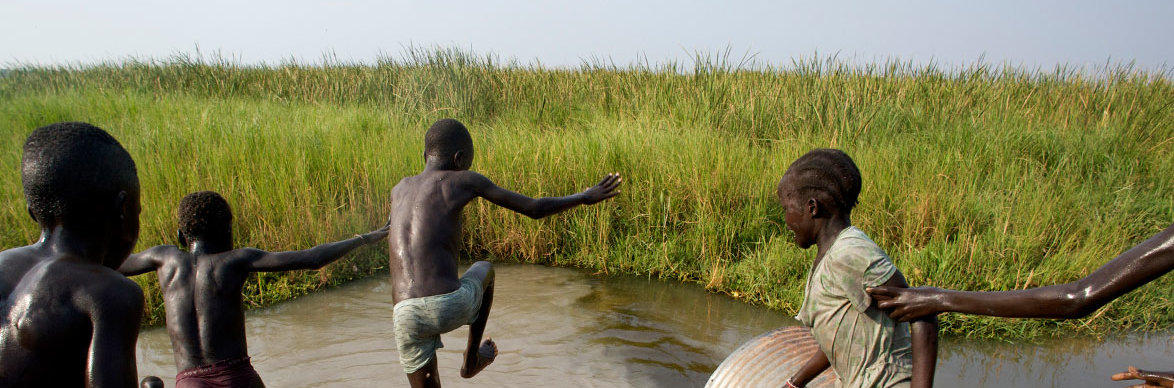
Until recently, no antimalarial had been developed specifically for infants weighing under 5 kg. (Photo: Justin Makangara / Swiss TPH / Fairpicture)
It was an assumption that turned out to be only partly true. Malaria in newborns does occur, yet symptoms may be unspecific - fever, poor feeding, lethargy - overlapping with other newborn illnesses and easily missed.[3] The disease was underdiagnosed, and that left the evidence base for a dedicated formulation thin, keeping this patient population invisible to drug developers and treatment guidelines alike.
Closing the gap required sustained work by many different partners - and a full development sequence from research and clinical trials to product registration, procurement, and implementation. Several of the institutions that made this possible are based in Switzerland, embedded in international partnerships that extend their reach far beyond the country's borders.
Building the evidence
At the time, the need for a dedicated treatment for newborns and young infants was not universally accepted. Novartis nevertheless decided to pursue one, working with MMV and other partners to build the clinical evidence that was missing.
Novartis developed a new dose strength of Coartem® (artemether-lumefantrine) specifically designed for infants weighing between two and under five kilograms. The formulation dissolves, including in breast milk, making it administrable even to the youngest patients.
The work was carried out as part of the PAMAfrica consortium - a multi-partner research collaboration co-funded by EDCTP2, supported by the European Union and the Swedish International Development Agency (Sida). Switzerland's participation in this European research consortium connects Swiss institutions to the kind of international research partnership that the renewed EU-Swiss agreement, signed in November 2025, is designed to sustain.[4]
The CALINA study - a Phase II/III trial conducted between 2020 and 2024 across the Democratic Republic of Congo, Burkina Faso, Kenya, Mali, Nigeria, and Zambia, with the majority of participants in the DRC - generated the evidence.[5] Led by African researchers and institutions, including Dr Bérenger Kaboré and the Clinical Research Unit of Nanoro (CRUN) in Burkina Faso, the study documented the burden of malaria in infants in high-transmission communities, showing it was higher than assumed.
„Ensuring the smallest babies suffering from malaria get the right dose of medicine has long been a challenge for doctors on the African continent.”
Dr Berenger Kabore,
Clinical Research Unit of Nanoro (CRUN), Burkina Faso
Swiss TPH coordinated the Democratic Republic of Congo study site, drawing on more than twenty years of experience in designing, implementing, and managing clinical trial sites in low-resource settings. The formulation achieved effective concentrations in the bloodstream comparable to those in older children, with good efficacy and safety.[6] In July 2025, Swissmedic approved Coartem Baby - the first and only antimalarial developed specifically for newborns and young infants weighing from 2 to 5 kilograms.

Building trust also involves taking parents' concerns seriously. (Photo: Justin Makangara / Swiss TPH / Fairpicture)
The Novartis-MMV partnership itself was not new. The two organisations had previously co-developed Coartem Dispersible, launched in 2009 and since delivered at scale.[7] Coartem Baby builds on a partnership model established over many years.
How Switzerland contributed
There was no national-level coordination behind this. The contribution emerged because institutions with very different roles - developing medicines, supporting clinical research, regulating products, and building research capacity – together contributed at each stage, from identifying the unmet need to enabling patient access.
MMV, founded in Geneva in 1999, is a product development partnership focused on antimalarial medicines. It works to close gaps in research and access for medicines that commercial channels alone would not bring forward. Its role is to bring scientific expertise, funding, and partners together around those gaps. In this case, it worked with Novartis through the PAMAfrica consortium to make Coartem Baby possible.
„Some of the most important medicines are also the hardest to develop - the markets are too small and the path too uncertain for any single organisation to tackle alone. The PDP model exists to bridge that gap
by bringing together the funding, expertise and partners to turn
scientific possibility into impact.”
Dr Martin Fitchet,
CEO of MMV
The Swissmedic authorisation was granted under the Marketing Authorisation for Global Health Products procedure - MAGHP - developed in partnership with Switzerland's Agency for Development and Cooperation, WHO, and the Gates Foundation. The procedure allows Swissmedic to assess the product together with national regulatory authorities in participating countries, connecting Swiss regulatory expertise to the countries where the medicine will be used. Eight African countries participated, together accounting for nearly half of all estimated global malaria cases.[8]
Novartis brought the pharmaceutical development and manufacturing capabilities needed to turn the evidence into a product that could be produced and supplied at scale. That decision - made at a time when the need for a dedicated treatment for the smallest patients was not universally accepted - reflects a long-term commitment that extends well beyond any single product. The company has committed to making Coartem Baby available on a largely not-for-profit basis in malaria-endemic regions.
„Newborns and young infants with malaria could not receive proper treatment for too long, simply because no medicine had been developed specifically for them. Together with our partners at MMV and in malaria-endemic countries, Novartis set out to change that. Switzerland's global health ecosystem provided the conditions that made this possible.”
Dr Lutz Hegemann,
President Global Health and Swiss Country Affairs, Novartis
Swiss TPH also serves as WHO's Collaborating Centre for Modelling, Monitoring and Training for Malaria Control and Elimination, linking emerging field evidence to wider policy work.[9]
The step that opens procurement
In April this year, WHO prequalified Coartem Baby - the first and only antimalarial developed specifically for newborns and young infants weighing from 2 to 5 kilograms - confirming it meets international standards of quality, safety, and efficacy.[10]
WHO prequalification is a key step towards enabling widespread access through public-sector procurement. Without it, a nationally approved medicine may remain practically inaccessible to the systems that reach most patients in endemic countries. Coartem Baby can now be procured at scale by UN agencies, the Global Fund, UNICEF, and other major international health procurers.
In September 2026, WHO updated its guidelines for malaria treatment to formally include Coartem Baby for infants weighing 2 to 5 kilograms.[11] Where prequalification opens procurement, guideline inclusion shapes clinical practice - it is the step that moves a medicine from procurement-eligible to treatment-recommended.
Ghana introduced Coartem Baby in October 2025 - the first country to make the treatment available to patients.[12]

One of the first Coartem Baby patients. (Photo: Nana Kofi Acquah / Novartis)
Why the international connections matter
What made that procurement milestone possible matters as much as the milestone itself. Institutions based in Switzerland contributed at different points - research, product development, regulation, and access - because they are connected to African research partners, European funding, WHO structures, and global procurement systems. Switzerland did not deliver Coartem Baby; its institutions contributed through those wider networks.
Maintaining these capabilities, partnerships, and international ties - at a moment when both global health financing and European research cooperation are under political pressure - matters not just for this pipeline, but for the capacity to close the next treatment gap. That took decades to build.
Sources & References
[1] Dobbs KR, Dent AE. Plasmodium malaria and antimalarial antibodies in the first year of life. Parasitology. 2016 Feb;143(2):129-38. doi: 10.1017/S0031182015001626 (updated per Manuel Hetzel, Swiss TPH).
[2] 30 million babies: EDCTP press release July 2025 / WHO Global Malaria Report 2023.
[3] Sultanli A et al. Management of malaria in newborns: a systematic review. BMC Infect Dis. 2025 Dec 5;25(1):1705. doi: 10.1186/s12879-025-12230-5 (updated per Manuel Hetzel, Swiss TPH).
[4] EU-Switzerland Programmes Agreement signed November 10, 2025. europa.eda.admin.ch. Switzerland joined EDCTP Association February 26, 2026. euresearch.ch
[5] CALINA ClinicalTrials.gov: NCT04300309 (added per Conor Cahill, MMV).
[6] CALINA results: Novartis/MMV press release April 24, 2024. novartis.com; EDCTP July 2025.
[7] Coartem Dispersible: Novartis/MMV. novartis.com / mmv.org
[8] MAGHP authorisation: Swissmedic press release July 8, 2025. swissmedic.ch.
[9] Swiss TPH WHO Collaborating Centre renewed March 2025. swisstph.ch/en/about/eph/health-interventions/whoccmalaria
[10] WHO prequalification April 2026. global-health-edctp3.europa.eu
[11] WHO Guidelines for Malaria, updated September 10, 2026. who.int/publications/i/item/guidelines-for-malaria
[12] Ghana launch October 2025. mmv.org / pamafrica-consortium.org