Not a one-way street: what global health partnerships give back to Switzerland
Long-term cooperation is meant to leave capacity behind in partner countries. Switzerland benefits from that capacity as well: in innovation, through its international networks, and in how well it is prepared for health threats.

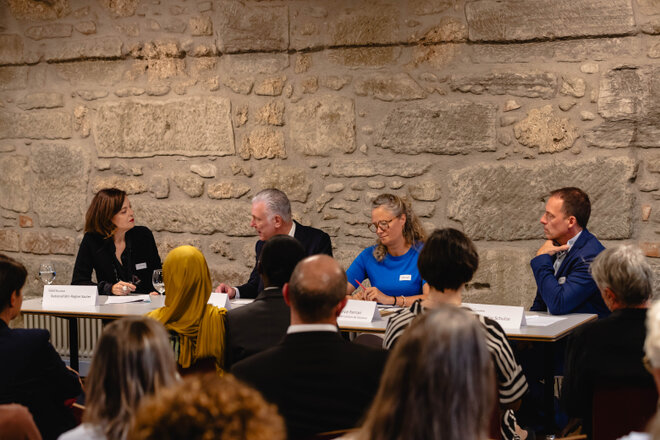
From left: National Councillor Regine Sauter (moderator), Lutz Hegemann (Novartis), Beatrice Ferrari (Canton of Geneva) and Alexander Schulze (Swiss TPH) at the parliamentary dialogue in Bern on 30 September 2026. (Photo: Stella Tandhika)
"What should successful international cooperation leave behind when the project ends?" Kenya's Ambassador to Switzerland, H.E. Fouzia A. Abass, asked that question at a parliamentary event in Bern at the end of September. Her answer was capacity: the ability of people, communities and institutions to do more for themselves, to withstand shocks, and eventually to contribute to others.
She gave an example from northern Kenya, where communities run seed banks for local crops. Farmers borrow seed when they need it and return more after the harvest. "Ten becomes twelve," she said. An external investment has become a local asset.
The question comes as Switzerland reorients its own international cooperation. In June 2026, the Federal Council set the course for the period from 2029, aiming for greater impact, with health as one of the SDC's four priority areas and a stronger role for humanitarian aid. Parliament is expected to debate the next strategy in 2028.
On impact, new data are available. In its Global Food Report 2026, Alliance Sufosec, an alliance of six Swiss development organizations co-funded by the SDC, compared 16 projects with their own baselines: since 2021, the share of households facing severe food insecurity has fallen from 22% to 11%. Christian Frutiger, Assistant Director General of the SDC, said food security and health can only be addressed together.
Abass called this encouraging evidence, and pointed to what such results make possible: "Not simply: What can Switzerland do for Kenya? But: What can Kenya and Switzerland build together?" Speakers from industry, the Canton of Geneva and research described what that looks like from the Swiss side: in innovation and competitiveness, in Geneva's international networks, and in health security.
Innovation & Competitiveness

Lutz Hegemann (Novartis), with moderator Regine Sauter: global health engagement brings Switzerland knowledge, regulatory standing, access to talent and reputation abroad. (Photo: Stella Tandhika)
At Novartis, said Lutz Hegemann, President Global Health & Swiss Country Affairs, diseases concentrated in the Global South carry the same weight in research as cardiovascular disease or oncology. "We do not see global health as a side project but rather as a core part of our mandate as a global company." He described universities, Swiss TPH, research-based companies and start-ups in Basel, together with International Geneva, as reinforcing each other.
Coartem Baby, the first malaria treatment designed for newborns, shows how those pieces connect. Developed by Novartis with Geneva-based MMV, it was approved by Swissmedic in July 2025 through a procedure in which eight African countries took part in the assessment. Swissmedic and the SDC have supported the harmonization of medicines regulation in Africa since 2015. Alexander Schulze, Head of Department at Swiss TPH, sees this as an area where Switzerland can benefit directly. Hegemann named what comes back: knowledge, regulatory standing, access to talent, and a reputation he notices when meeting decision-makers in Africa.
From Kenya's side, Abass described what her country brings to the partnership: "talent, researchers, entrepreneurs, a growing economy and a gateway to a region of more than 300 million people." In November 2024, the two countries signed a memorandum of understanding on cooperation in education, research and innovation.
International Geneva & International Networks

Beatrice Ferrari (Canton of Geneva): in Geneva, Swiss stakeholders can access the right expertise within hours and take an active part in shaping global responses. (Photo: Stella Tandhika)
In Geneva, a technical question can find the right expertise within hours, said Beatrice Ferrari, Director of International Affairs for the Canton of Geneva. The reason is concentration: Geneva hosts 42 international organizations, missions from 186 states and several hundred NGOs, and by Ferrari's count around 90 of these organizations include a health component in their work.
She named three assets that took decades to build and cannot easily be reproduced elsewhere: trust, proximity of expertise, and the density of organizations with a health dimension. Abass described the same mechanism from a partner country's perspective: "Cooperation creates trust. Trust creates networks. Networks create opportunity."
The same proximity helped Geneva itself during the Covid-19 pandemic. The canton drew on experts from Médecins Sans Frontières, whose experience of comparable crises directly helped Geneva's response, including for its most vulnerable residents. Geneva, Ferrari said, is increasingly exposed to global crises and does not always have the necessary expertise itself.
Health Security & Resilience
Schulze anchored his answer in two terms: partnership and capacity building. Better preparedness for Switzerland, he argued, depends on international partnerships and knowledge exchange built up over many years. Expertise that Swiss researchers developed with partners in Africa, for instance in setting up disease surveillance systems, now also benefits Switzerland. "It is no longer just one side that benefits; all sides benefit," he said.
Closer to home, the tiger mosquito, which can transmit dengue, chikungunya and Zika, is spreading in Switzerland. Swiss TPH monitors it on behalf of the federal government and cantons. According to Schulze, that monitoring draws on approaches developed through international cooperation. In March 2026, Basel-Stadt's Cantonal Laboratory reported dengue virus in a mosquito sample collected in 2024, the first detection of the virus in mosquitoes north of the Alps.

Alexander Schulze (Swiss TPH): knowledge developed through global health partnerships increasingly flows in both directions. (Photo: Stella Tandhika)
Antibiotic resistance is another example. Researchers from Unisanté, Swiss TPH, the Ifakara Health Institute and Tanzania's National Institute for Medical Research developed ePOCT+ , a digital tool that guides health workers treating sick children. In a trial in Tanzania co-funded by the SDC, antibiotics were prescribed in 23% of consultations where the tool was used, compared with 70% where it was not. According to Schulze, the approach is now being applied in the canton of Vaud.
Long-term commitment in a fragmented world
National Councillor Regine Sauter, who moderated the panel, asked how far international tensions put these strengths under pressure. None of the three saw growing fragmentation as a reason to pull back, and each gave a different reason. For Schulze, when other actors withdraw, Switzerland has a chance to expand existing partnerships into new areas of mutual interest; giving up past investments would be a mistake, because international cooperation "cannot be separated from innovation, research and technology." Hegemann argued that if other countries pull back, Switzerland should treat that as an opportunity rather than follow the same path, while Ferrari called for rethinking areas of cooperation and building creative partnerships.
For Councillor of States Eva Herzog, co-president of the Parliamentary Group Global Health, the conclusion was clear: "Switzerland is unique, and we must not neglect this ecosystem – we must keep nurturing it."
Abass had ended her own remarks with a question: not only what Kenya and Switzerland can do together now, "but what we can start building together today that will still matter ten years from now."
About the dialogue
The perspectives in this article were shared at a parliamentary dialogue on 30 September 2026 in Bern, held by the Parliamentary Group Global Health together with Alliance Sufosec, Medicus Mundi Switzerland, the Swiss Malaria Group and the Swiss Alliance against Neglected Tropical Diseases. The event was opened and closed by Councillor of States Eva Herzog and moderated by National Councillor Regine Sauter, the group's co-presidents.
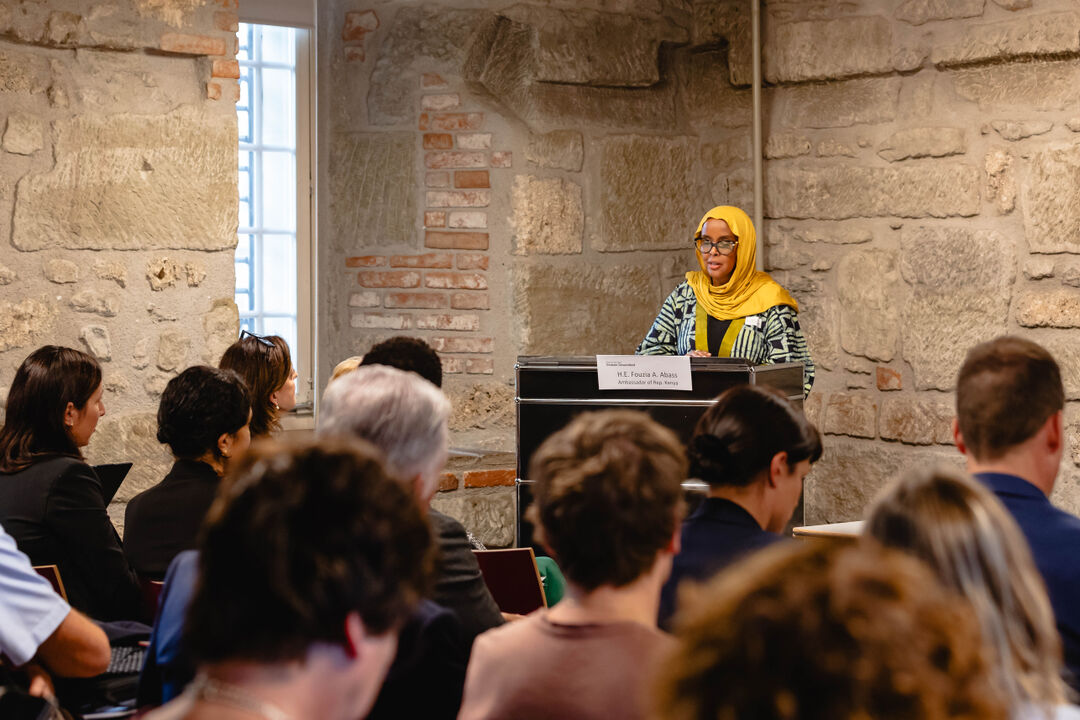
H.E. Fouzia A. Abass, Ambassador of Kenya to Switzerland, opened the dialogue's partnership perspective. (Photo: Stella Tandhika)
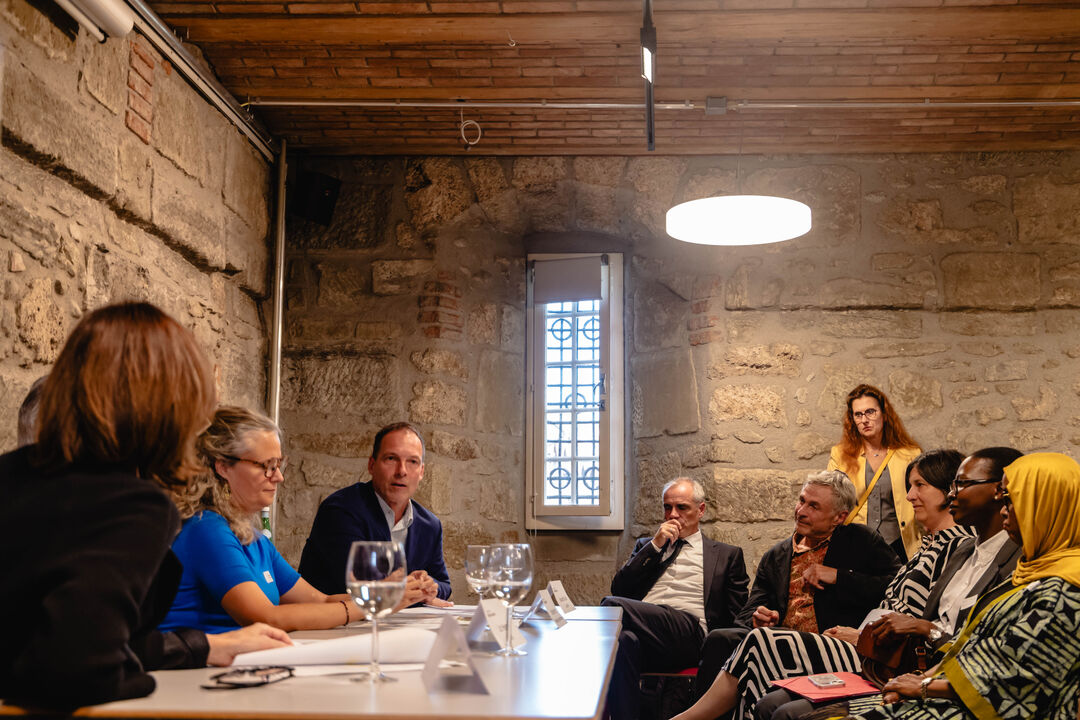
The panel in discussion at the Polit-Forum Bern. (Photo: Stella Tandhika)
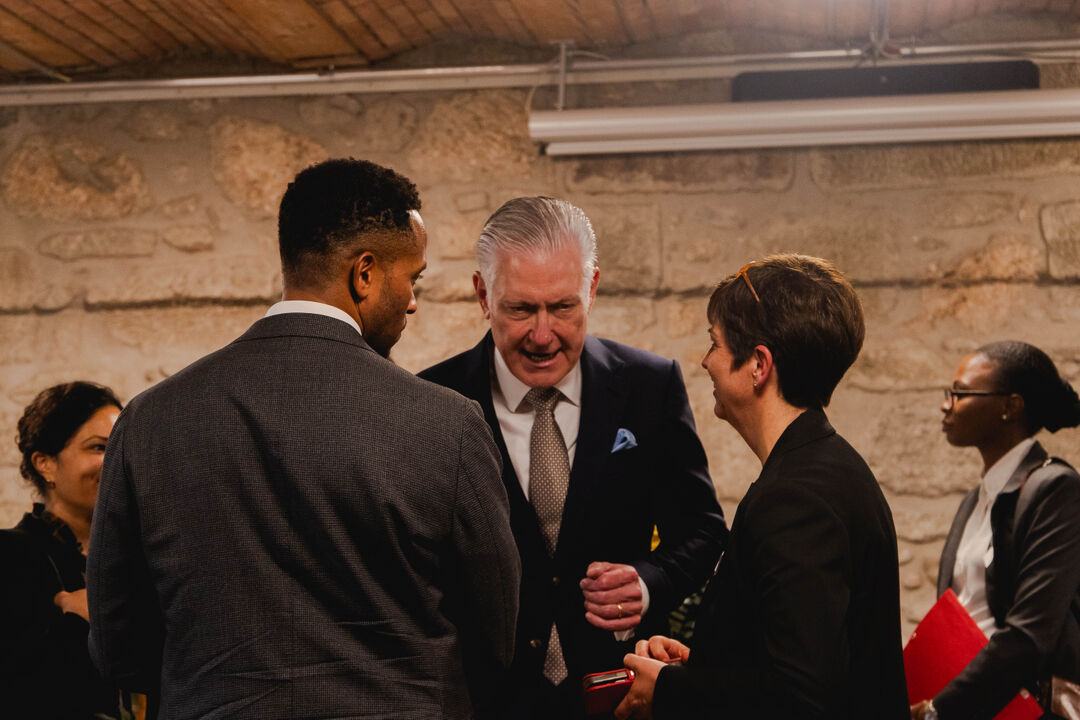
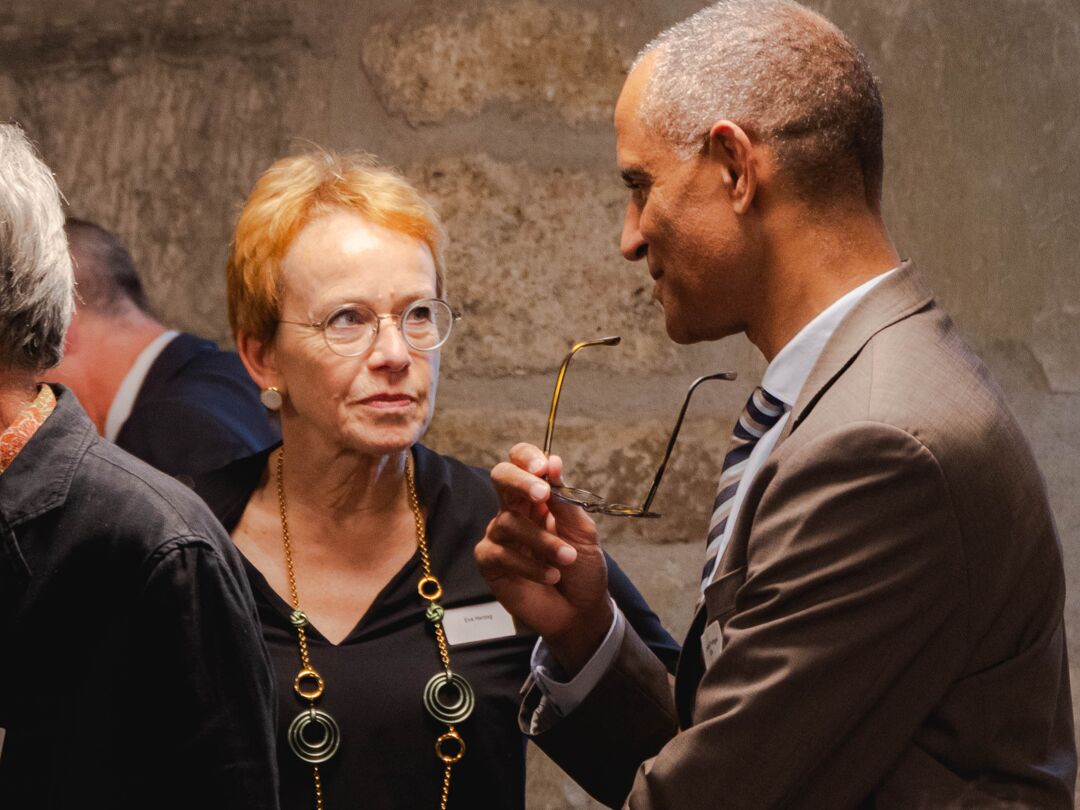
From left: Matthew Harold and Lutz Hegemann (both Novartis) with Nadine Schecker (SMG and SANTD) after the dialogue. (Photo: Stella Tandhika)