mozambique

SolidarMed
SolidarMed's vision is to provide all people in southern and eastern Africa with access to good health care. The Swiss NGO for Health in Africa consists of local country teams in the eight countries of operation.
A Member Success Story:
Fewer children die from malaria thanks to colour triage cards
Child mortality in Mozambique is high, partly due to the large number of malaria-related deaths. However, a new approach introduced by SolidarMed at the reception of paediatric emergency units is helping save lives. The introduction of the Manchester Triage System has improved the diagnosis and timely treatment of sick children, reducing fatalities from malaria. One such success story is that of Crisaldo, a young boy who survived malaria thanks to the red triage card he received.
For five consecutive years, global malaria cases have increased, which is concerning because malaria remains a potentially fatal disease. In 2023, the World Health Organisation (WHO) reported nearly 600,000 deaths worldwide from malaria, with most of the casualties in Africa – accounting for 95 per cent of all malaria deaths. Three-quarters of these were children up to the age of five. These statistics are especially disturbing because malaria is both preventable and treatable.
Malaria leads to death primarily when treatment is delayed. Therefore, timely diagnosis and efficient treatment strategies are critical. Historically, children in Mozambique's paediatric emergency departments were treated based on the order of their arrival, which sometimes resulted in delayed care. To ensure that children promptly receive the attention they need, SolidarMed, with regional partners, introduced the Manchester Triage System at various paediatric emergency departments as part of the "Survive and thrive" project.

A reception in Metoro HC. Photo credits: SolidarMed
The system works by having trained reception staff assess the severity of a patient’s symptoms upon arrival at a healthcare facility using a set of charts. Patients then receive a coloured card that reflects the urgency of their condition: red - immediate treatment; orange - treatment should begin within 10 minutes or less; yellow - treatment should begin within 1 hour or less; green - treatment should begin within up to 2 hours; blue - treatment should begin within up to 4 hours. In smaller healthcare facilities, only three or four colours are used. Studies have shown that implementing such a system has reduced child mortality in paediatric emergency departments by up to 40 per cent.

The Manchester Triage System helps to prioritise patients by handing them a coloured card that reflects the urgency of their condition. Photo credits: SolidarMed
In Mozambique, where the population is around 33 million, the under-five mortality rate is 66 per 1,000 live births—compared to just 4 per 1,000 in Switzerland. Malaria contributes significantly to this high rate, being responsible for at least 40% of child deaths. The country records more than 10 million malaria cases annually, with nearly half the population lacking access to mosquito nets.
Crisaldo has not been spared from malaria either. The two-year-old boy had already had a fever for several days when his mother decided to take him to the nearest health centre in Metoro. The reception staff, trained in the triage system, quickly identified three critical symptoms: high fever, loss of appetite, and paleness. They gave Crisaldo a red card, and he was immediately seen by a nurse.
His test results confirmed a severe case of malaria with anaemia, and the healthcare team began treatment right away. After four days in the children's ward, Crisaldo was no longer febrile, his appetite returned, and his mother felt confident that he would recover.
His mother was also educated about malaria prevention, such as the use
of mosquito nets, and now understands that she should take him to the
hospital immediately if he has another fever.

Crisaldo and his mother during the admission in Metoro HC (November 2021). Photo credits: SolidarMed
At home, Crisaldo continued treatment with malaria medication, iron supplements, and paracetamol. Thanks to the triage system, his malaria was detected and treated in time, preventing him from becoming another malaria victim.
„Nearly one-third of the children seeking help at the project’s emergency departments are diagnosed with malaria. This underscores the relevance of quick and accurate treatment.”
Almost one-third of the children seeking help at the emergency departments of the "Survive and Thrive" project are diagnosed with malaria, highlighting the importance of prompt and accurate treatment. The system has proven effective not just in Crisaldo's case but in many others. SolidarMed's goal in the first phase of the project was to ensure that 90% of children who received a red card were treated within 15 minutes. In all facilities where the system was introduced, more children were treated within that timeframe last year. Since the introduction of the coloured card system, malaria-related deaths have been reduced by up to 99% in the project’s health facilities.
To further support this positive development, medical staff continue to receive training in the correct diagnosis and treatment of malaria. SolidarMed also aims to expand these effective tools nationwide to improve the health of young children in Mozambique.
Text and images by SolidarMed.
SolidarMed
SolidarMed's vision is to provide all people in southern and eastern Africa with access to good health care. The Swiss NGO for Health in Africa consists of local country teams in the eight countries of operation. Over 150 people, including doctors, midwives, nursing specialists, computer experts, drivers and many more, work to improve health care for local communities.
Learn more about SolidarMed: https://www.solidarmed.ch/en/about-us
Survive and Thrive
SolidarMed is helping healthcare facilities roll out a system of coloured cards which designate the urgency of treatment. This ensures that children in life-threatening situations are treated more quickly than less urgent cases, which in turn increases their chances of survival. To ensure the successful roll out in as many locations as possible, SolidarMed is working with medical training centres and national and provincial health authorities.
Learn more about the project: https://www.solidarmed.ch/en/mozambique/survive-and-thrive
SMG Member Success Stories
The Member Success Stories aim to illustrate key advancements in research, prevention, and treatment by members of the Swiss Malaria Group. Each story showcases how our member’s involvement advanced the fight against malaria.

The Global Fund
The Global Fund is a worldwide partnership to defeat HIV, tuberculosis (TB) and malaria and ensure a healthier, safer and more equitable future for all. For more information on our members, please go to the member's website by clicking on the member's logo.
A member success story:
Building Back After Historic Storm
Following Cyclone Freddy, Mozambique fights a malaria surge fueled by climate change
When the floodwaters started rushing through Celina Tembe’s home, a neighbor helped Celina and her three children to safety.
„In the past, we knew that during the winter there would be no rain, but nowadays it has become… normal.”
Most of Celina’s neighborhood in Boane District, Mozambique, was under water. She and her family fled to a local school that had been transformed into an accommodation center for families displaced by the flooding.
The area had already been impacted by flooding, but the situation intensified with the arrival of Cyclone Freddy, the longest lasting tropical cyclone in recorded history. Earlier this year, the cyclone struck Mozambique’s coastline twice, displacing an estimated 184,000 people and destroying close to 132,000 homes.
After sheltering at the school for 10 days, Celina and her children returned home, where they found all of their belongings covered in mud and ruined by water. The family’s crops had been destroyed.
Throughout their neighborhood were pools of stagnant floodwater – the perfect breeding ground for malaria-carrying mosquitoes. People then started to get seriously ill, including Celina’s two young daughters.
“We didn’t have mosquito nets. We were just fleeing from water in our houses,” she said. “I didn’t want to believe the truth. But when I arrived at the hospital, that is when I saw that it was malaria.”
For Celina, hearing the news that both of her daughters had malaria was terrifying. Just six months before the cyclone hit, her 35-year-old husband Maxaieie came home late from work, sick with a fever. Less than 24 hours later, he tested positive for malaria and died.
“That is when I realized that I’m alone now. I’m the father and the mother of my kids. I started working in the field [harvesting crops] to sustain my children,” she says.

Celina and her family wait in their neighbor’s house while their home is sprayed to protect the family from malaria. Photo credits: Tommy Trenchard, The Global Fund
After both of Celina’s daughters were tested for malaria and rapidly put on treatment, they both made full recoveries. Today, Celina is doing her best to replace everything they lost from the cyclone, including furniture, mattresses, the family’s television and food supplies.
Celina and her family are not the only ones suffering the grave consequences of climate change.
Malaria is considered one of the most climate-sensitive diseases, with upsurges in cases recorded after storms and flooding in regions around the world. The World Health Organization has estimated that by 2050, there could be an additional 250,000 deaths per year due to climate change – and 60,000 of these deaths could be from malaria.
In the immediate aftermath, investments were used to provide flood relief equipment, food, and mosquito nets to displacement centers.
Funding was then increased to MOSASWA, a regional initiative between Eswatini, Mozambique and South Africa that works across borders to fight malaria, which is funded by the Global Fund, the Gates Foundation and Goodbye Malaria.
Funding was used to bolster spray campaigns close to displacement centers and apply larvicides to kill mosquito larva in areas where water remained after the floods receded. The locations of all bodies of water treated were recorded with mobile applications to provide near real-time data on the larvicide applications.
Spray teams also reached 10,000 houses through indoor residual spraying to better protect people directly affected by the floods.
Adelaide Tamele leads one of the spray teams that worked in Celina’s neighborhood. She has been working as a sprayer for six years now.

Portrait of Adelaide Tamele. Photo Credit: Tommy Trenchard, The Global Fund
She vividly remembers the cyclone and how she and her team had to stop working due to the heavy rains. They then re-doubled their efforts once the storm was over.
“After the floods, we had to continue working in order to finish spraying the houses that we were unable to do, due to the floods,” she says. “After the floods, malaria cases increased – there were a lot of mosquitoes.”
In addition to spraying, Adelaide and her team speak to families about malaria prevention, how to identify symptoms, and where to go for testing and treatment.

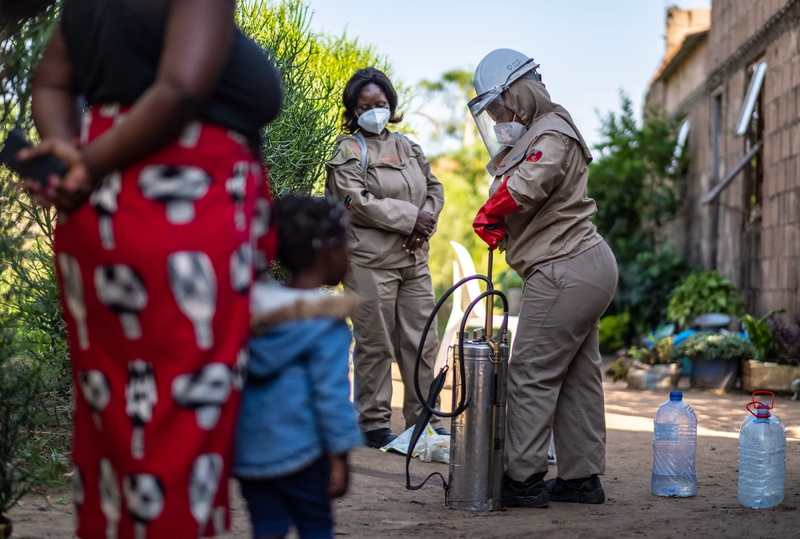
Adelaide and her team spray homes to protect families against malaria. Photo Credit: Tommy Trenchard, The Global Fund
Adelaide says she is passionate about leading a team that fights back malaria because it provides her with an opportunity to protect the health of her community. She, too, has been personally impacted by the disease: Her 16-year-old niece died of malaria last year.
“She got a headache… the following day we took her to the hospital because the pain was not going away. She went into an intensive care unit… and then passed away,” she says.
„My dream is to eliminate malaria. I would like malaria to disappear completely.”
The Global Fund supports countries and communities responding to health crises caused by extreme weather events and is urging for increased investments to mitigate the severe health impacts of climate change.
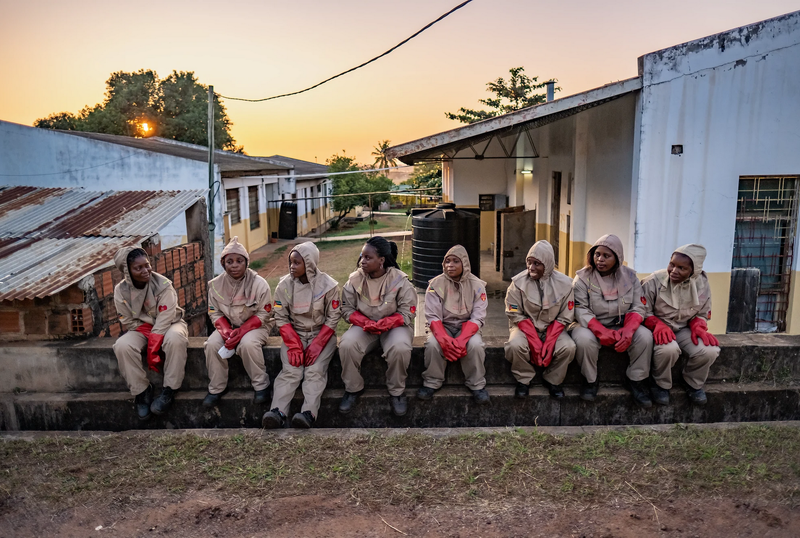
Photos by Tommy Trenchard. Text by the Global Fund.
This story was originally published on the website of The Global Fund and has been adapted for the SMG Member Success Stories by the Swiss Malaria Group.
The Global Fund
The Global Fund is a worldwide partnership to defeat HIV, TB and malaria and ensure a healthier, safer, more equitable future for all.
SMG Member Success Stories
The Member Success Stories aim to illustrate key advancements in research, prevention, and treatment by members of the Swiss Malaria Group. Each story showcases how our member’s involvement advanced the fight against malaria.
SMG Member Success Stories
The Member Success Stories aim to illustrate key advancements in research, prevention, and treatment by members of the Swiss Malaria Group. Each story showcases how our member’s involvement advanced the fight against malaria.
A member success story:
Julia carries a mobile app in her pocket to protect her community from deadly disease
The family sought Júlia out late at night, looking for help.Their child was desperately ill: fever, vomiting, diarrhea. They were frantic.
Júlia Lúis is an agente polivalentes elementare, or community health worker, in Upalaa village in Boane District, Mozambique. She visits families in her community every day, listening to and learning about their healthcare needs, conducting clinical assessments, providing health advice – and administering lifesaving medicines.
„I did the malaria test, and I gave them the medicine,” she said. “After two days I went to their home, and I found out that the child was already getting better. I was thrilled.”
Bringing healthcare to some of the hardest-to-reach places
Júlia is one of 8,500 community health workers in Mozambique. She and her colleagues are nominated by fellow community members. They undergo a rigorous training course and then provide much-needed health services, including in some of the hardest-to-reach places.
Community health workers prioritize reaching children under 5 and focus on preventive care to protect people from deadly diseases like malaria and pneumonia. Most oversee 500 to 2,000 families.

Júlia with Gil Agostino and his daughter Elisa during a follow-up visit to the family’s home in Upala-a, Mozambique. Elisa recently contracted malaria but is recovering well. Photo credits: Tommy Trenchard, The Global Fund
On average, Júlia visits 25 to 30 families per month – trekking hundreds of kilometers and tracking hundreds of patients.
Not so long ago, she carried a massive binder filled with hundreds of loose-leaf pages: “The registration book is too big. And I was obliged to walk with the handbook module to give lectures, which is too big as well.”
For most of her 10-year career, Júlia relied on these binders to record patient information, keep track of supplies and give lectures on drinking clean water and maintaining sanitary toilet facilities.
The binders got soaked in the rainy season and slowed her down in the heat.
Then came upSCALE: a smartphone app that has transformed Júlia’s work – and offers a wealth of digital health data to strengthen Mozambique’s health systems.
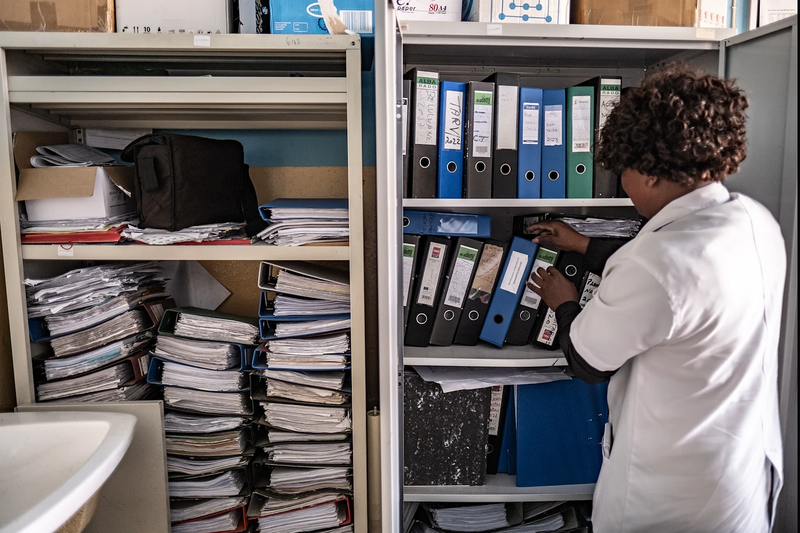
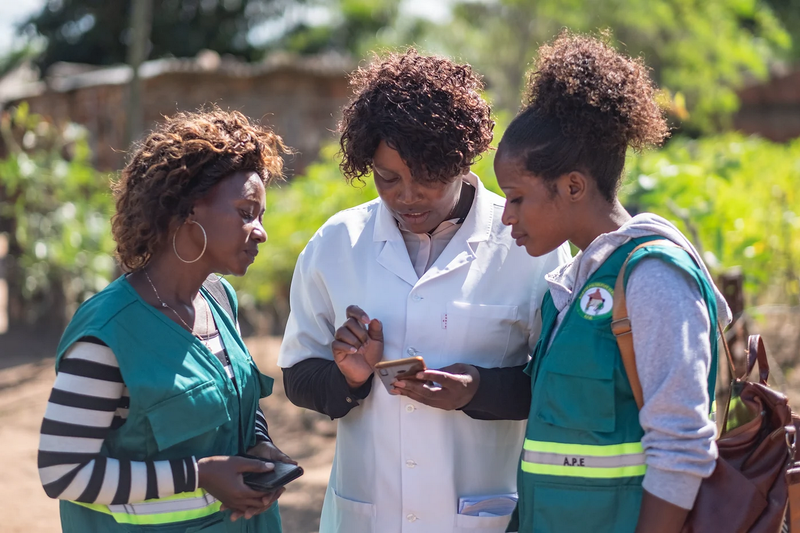
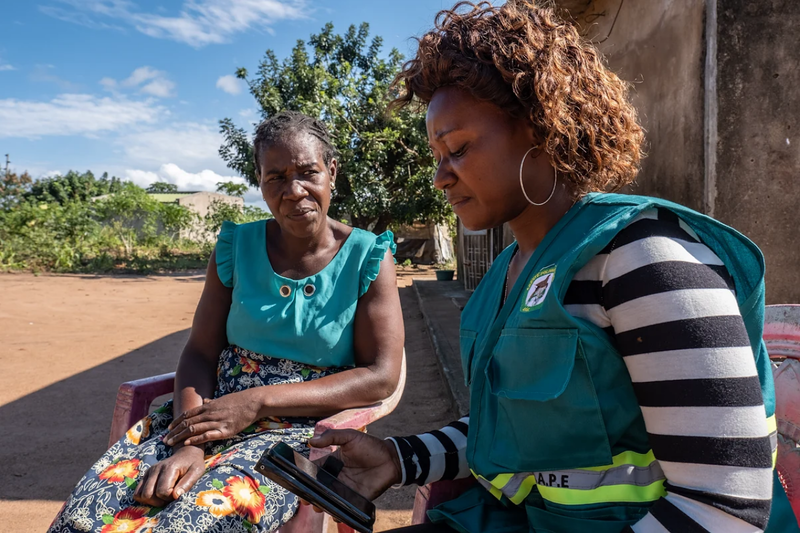
Not so long ago, Júlia carried binders filled with hundreds of loose-leaf pages to keep track of important health information. Now, she uses upSCALE to track patient data. Photo credits: Tommy Trenchard, The Global Fund
What’s in the app?
upSCALE is Júlia’s constant companion on home visits. She opens it as soon as she arrives to add patient contact information and update medical histories.
An interactive feature, complete with diagrams and illustrations, guides Júlia and her patients through discussions about symptoms: Do you feel warm? Are you tired?
„They can see the illustration from images which are in the cell phone,” Júlia said. “I use [them] to show the people that this means that, and they get the explanation so easily.”
Júlia’s app feeds information to her supervisor, Emedita da Julia Sefana, at the Boane Centro de Saúde.
Emedita uses the data to inform her conversations with Júlia: providing feedback, filling gaps in Júlia’s experience and introducing new tools and knowledge.
Emedita also uses upSCALE to anticipate and prevent stock-outs and identify high-priority patients and regions that need special attention. The app provides Emedita with the information she needs to understand and respond to her community’s needs as well as capture vital data to prepare for future health threats.
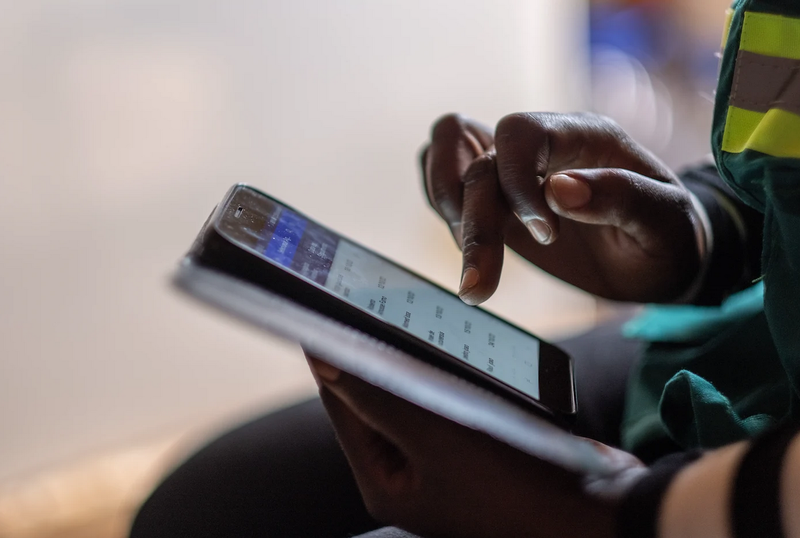

upSCALE includes an interactive feature with images that helps Júlia and her patients identify symptoms, and a step-by-step guide to diagnose and treat illnesses like malaria. Photo credits: Tommy Trenchard, The Global Fund
Supporting urgent health needs after a crisis
In early 2023, Mozambique was hit hard by wave after wave of rain. In less than eight weeks, the country was inundated by more than a year’s worth of total rainfall. Tropical Cyclone Freddy made landfall twice, bringing winds that reached 148 kilometers per hour (kph).
„The road that I use to get to the community was flooded,” Júlia said. “I couldn’t do my job. I couldn’t work.”
Once the storms passed, large bodies of still water became breeding grounds for disease-carrying mosquitoes. Malaria rates shot up.
upSCALE helped Júlia and her colleagues monitor infections. They logged symptoms, noted who needed a test and where, and kept track of medicines and chlorine tablets distributed to each home.
Data from these outbreaks – logged in the app and shared among community health workers as well as regional and national health officials – paint a picture of how extreme weather events impact people’s health and lives across the country.
These data are increasingly important to prepare for and address health crises brought on by cyclones like Freddy, Alvaro and Belal – which drew near Mozambique’s coast in early 2024 and reached winds of 170 kph.
As extreme weather events become more frequent, the window of time to prepare for and address health crises brought on by storms, floods and gale-force winds becomes smaller – making tools like upSCALE even more vital.
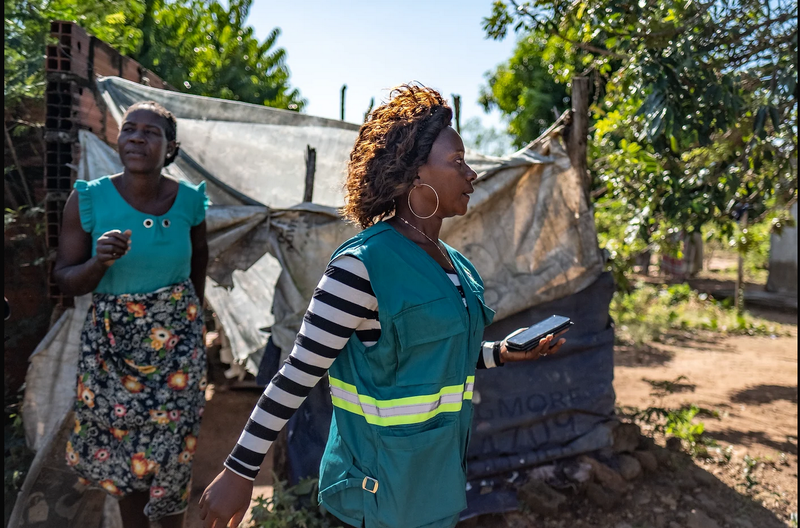


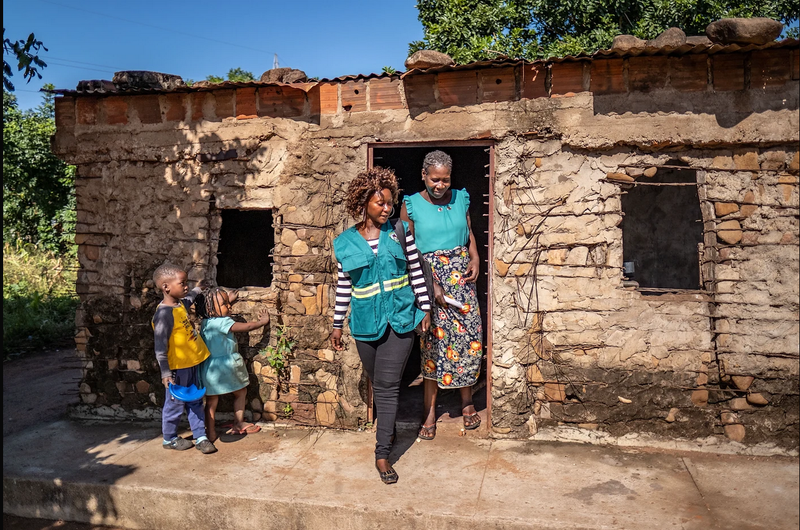
Júlia inspects damage caused by Cyclone Freddy, which brought rains and floods that created the perfect conditions for disease-carrying mosquitoes to breed. Photo credits: Tommy Trenchard, The Global Fund
“What you did [for] me is priceless”
As of January 2024, more than 3,600 community health workers and approximately 1,000 supervisors use upSCALE in 7 out of 11 provinces in Mozambique. With investments from the Global Fund and private sector partners, and support from the Malaria Consortium and UNICEF, Mozambique’s Ministry of Health aims to launch the app nationwide by the end of 2026.
In the future, data from upSCALE will be seamlessly incorporated into the national health information system to help monitor, evaluate and act on health needs across the country.
The Global Fund invests more than US$150 million a year to support use of digital health tools like upSCALE. This includes working with partners like Dimagi, which built the technology that supports upSCALE in Mozambique and a similar tool in Burkina Faso.
The Global Fund also recognizes that tools like upSCALE are only effective if people know how to use them.
Between 2021 and 2023, the Global Fund invested US$583 million in training and support for community health workers, who are often the first to help communities recover from disease outbreaks and climate emergencies.
Júlia is one of more than 2 million community health workers in the countries where the Global Fund invests. And she knows she is making a difference.

Photo credits: Tommy Trenchard, The Global Fund
Written by Elise Walter. Photos by Tommy Trenchard. With many thanks to Mozambique’s Ministry of Health.
This story was originally published on the website of The Global Fund and has been adapted for the SMG Member Success Stories by the Swiss Malaria Group.
The Global Fund
The Global Fund is a worldwide partnership to defeat HIV, TB and malaria and ensure a healthier, safer, more equitable future for all.
SMG Member Success Stories
The Member Success Stories aim to illustrate key advancements in research, prevention, and treatment by members of the Swiss Malaria Group. Each story showcases how our member’s involvement advanced the fight against malaria.